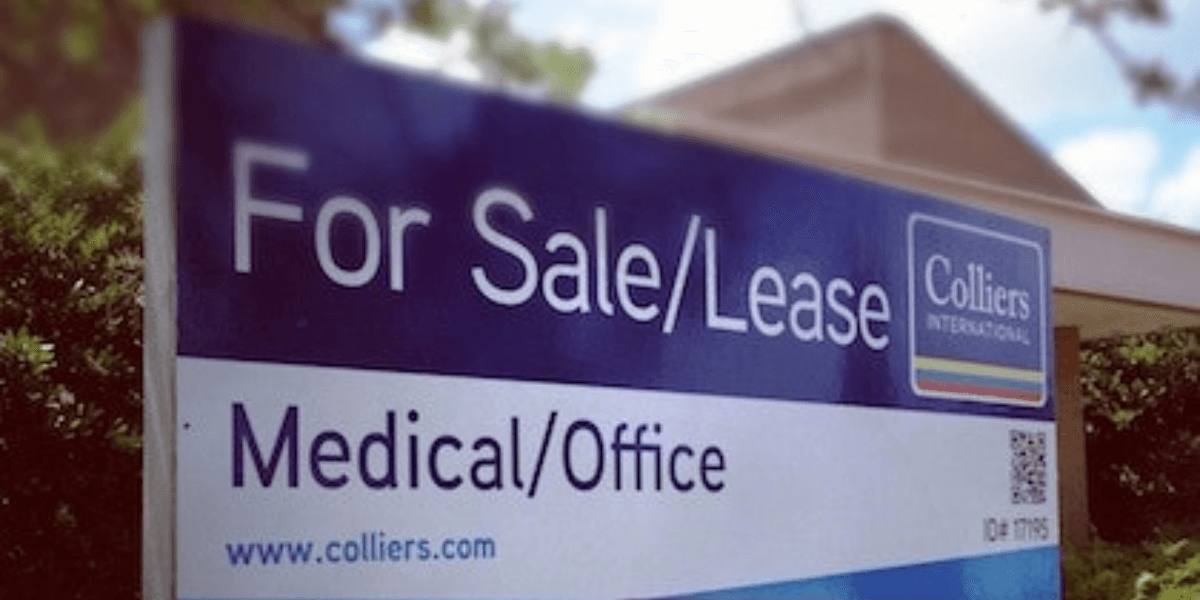
When Is the Right Time to Buy Your Office Space Instead of Leasing?
This is a question I have heard from clients throughout my career, and it never gets old. It tends to surface in the same conditions every cycle: when lease rates spike, when property values fall far enough to look attractive, or when a business owner finally gets tired of writing rent checks to someone else. Right now, in 2026, I am hearing it more than ever.
And honestly? The timing of the question makes sense. We are sitting at a genuinely rare intersection of market forces: interest rates have come down meaningfully after the aggressive hiking cycle of 2022 and 2023, office valuations have undergone a historic reset, and a wave of distressed assets is hitting the market in a way I have not seen in my career. At the same time, the conversation about how and where people work is far from settled.
The short answer is that the decision to buy versus lease in 2026 is more complex than it has been in decades. Let me walk you through exactly what I am watching and what I tell my clients when they ask.
The Current Market Context: What Has Actually Changed
Before we get into the buy-versus-lease math, let us establish where the market actually stands. Getting this wrong leads to bad decisions.
The office market has likely bottomed, but the recovery is uneven. Industry-wide data and the deals I am working right now both point to the same conclusion: the worst of the price corrections appears to be behind us in most major markets. Vacancy rates are expected to drop below 18 percent nationally in 2026, and Class A buildings in well-located central business districts are, in many cases, approaching full occupancy. The “flight to quality” is real and measurable. Class B and C commodity space, on the other hand, is still struggling, and that gap is widening, not narrowing.
The distressed opportunity is substantial and time-sensitive. Approximately $930 billion in commercial real estate loans are maturing in 2026, and at least $126 billion of that is considered distressed. Many existing owners cannot refinance at current rates. That creates motivated sellers and acquisition opportunities at price points that simply were not available two or three years ago. Commercial real estate investment is expected to increase 16 percent in 2026 to approximately $562 billion, suggesting institutional capital has already started moving. The window for truly distressed pricing will not stay open forever.
Borrowing costs are more favorable than they were, but not “free.” After three consecutive rate cuts in late 2025, the Federal Reserve paused in January 2026, holding the federal funds rate at 3.50 to 3.75 percent. As of early April 2026, commercial mortgage rates are starting around 5.38 percent, with a range of approximately 4.99 to 7 percent or higher depending on the asset, the borrower, and the lender’s appetite. That is meaningfully better than the 7 to 8 percent environment of 2023. Additional rate cuts are anticipated later in 2026, though the timing remains data-dependent.
The hybrid work debate has not resolved, but it has stabilized. Right now, among remote-capable U.S. employees, 52 percent work hybrid schedules, 27 percent are fully remote, and only 21 percent are fully on-site five days a week. That said, the cultural and policy pendulum is swinging back toward the office. Roughly 30 percent of companies will require five days per week in-office by the end of 2026, and 83 percent of global CEOs expect a full-time office return across their organizations by 2027. Job seekers still prefer flexibility: 55 percent rank hybrid as their top preference, and 64 percent say they would leave or begin searching if fully remote options disappeared. The practical reality is that most professional office users are operating in a hybrid model, and space planning needs to account for that reality.
What I tell my clients is this: the data supports cautious optimism about office as an asset class, but do not let optimism override operational discipline.
Why 2026 May Be the Right Time to Own
The “buy low” thesis is not wishful thinking right now. Here is what makes the current window genuinely compelling for the right buyer.
The Basis Play: Acquiring Below Replacement Cost
This is the single most important concept for any corporate user considering ownership in 2026. Unlike the steady appreciation of the 2010s, office values in many markets have corrected dramatically. Distressed sellers are real, and in some cases, you can acquire a Class A or Class B-plus asset at a cost basis significantly below what it would cost to build that building from scratch today. I have not seen this dynamic in my career. The opportunity is legitimate.
The key is selectivity. Trophy assets in transit-served CBDs with modern amenities are recovering. Generic suburban office parks, particularly in markets with limited demand drivers, remain challenged. Buying the right asset matters more in this cycle than almost any other factor.
A More Predictable Rate Environment
We are no longer in the whipsaw environment of 2022 and 2023. With the Fed in a measured pause after cutting rates three times in late 2025, the borrowing environment has stabilized enough to model accurately. Rates are not at the historic lows of 2011 or 2020, but predictability has enormous value when you are building a 10-year financial model. And if you acquire now and rates continue to drift lower, refinancing remains an option. You are not locked in permanently.
Control That a Lease Cannot Provide
In a leasing scenario, your operational stability is partly tied to your landlord’s financial health, and in 2026, that is not a trivial risk. We have seen situations where tenants paying rent on time faced significant disruption because their landlord defaulted on the building’s mortgage. When you own, you control the HVAC hours, the security protocol, the capital improvements, and the renovation decisions. You do not need a landlord’s approval, and you do not face operational uncertainty if a building changes hands unexpectedly.
The Cost of Capital Is Still Real
Even at 5.00-5.5 percent, debt costs money. Compare that to the 3 percent environment of 2020 and 2021, and the monthly debt service on the same asset looks meaningfully different. In some cases, particularly for buyers putting less equity down, the capitalization rate of the property may not exceed the cost of borrowing. This “negative leverage” scenario is a genuine risk that needs to be stress-tested in any underwriting.
The buyers winning deals in 2026 are, in my experience, those with substantial equity. Down payments of 35 to 50 percent reduce debt service, improve lender confidence, and make the cash-on-cash math work more effectively. If you are not in a position to deploy that kind of equity without straining operations, the math may favor leasing.
Hybrid Work Has Not Settled Permanently
The most honest thing I can tell you is that no one, including me, knows exactly where hybrid work stabilizes over the next five years. We know that 83 percent of CEOs want full RTO by 2027. We also know that 64 percent of remote-capable employees say they would leave if flexibility disappeared. Those two data points are on a collision course, and the outcome will shape office demand for years. If your headcount is growing, stable, and you are confident in your geographic commitment, ownership makes sense. If AI tools, automation, or workforce shifts could reduce your space needs by 20 to 30 percent within the next few years, a lease preserves your ability to adjust.
Leasing in 2026: Still the Right Move for Many
The lease-versus-buy conversation is not a competition. Leasing remains the strategically superior choice for a significant portion of corporate users, and the current market conditions make leasing genuinely attractive.
Tenant concession packages are historically generous. Landlords across most markets are competing aggressively for tenants. I am negotiating deals right now where tenant improvement allowances, free rent periods, and flexible term structures are bringing the effective cost of occupancy to levels that are surprisingly favorable. If you are a creditworthy tenant, you have meaningful leverage at the negotiating table.
Flexibility has measurable financial value. The biggest structural argument for leasing in 2026 is optionality. Lease terms of 3 to 7 years give you the ability to right-size your footprint as workforce patterns evolve. Locking into a mortgage on a building you eventually need to exit is far more expensive than a lease you outgrow.
Capital stays in the business. Every dollar tied up in a down payment and building reserves is a dollar not available for hiring, technology, growth, or the unexpected. For most companies, the return on deploying capital into the core business exceeds the long-term return from owning commodity office space.
The risks of leasing in 2026 are real but manageable: landlord default risk at troubled properties is worth taking seriously, and lease renewal exposure in a recovering market should be planned for. Both risks can be addressed with smart deal structure and early renewal negotiations.
The Ownership Case: For the Right Buyer, at the Right Asset
Ownership in 2026 is not for everyone. But for the buyer with the right profile, it is one of the most compelling opportunities I have seen.
The long-term appreciation case is sound. Buying at or near the bottom of a cycle and holding through normalization is a time-tested strategy. Distressed assets acquired today at below-replacement cost have meaningful upside over a 7 to 10 year hold as the market continues to stabilize. That upside is not guaranteed, but the risk-adjusted case is better than it has been in years.
Tax advantages remain powerful. Depreciation schedules, interest deductions, and cost segregation studies give profitable companies real tools to shelter income. Run the numbers with your CPA. The after-tax economics of ownership often look significantly better than the headline comparison suggests.
Ownership risks require honest evaluation. Older buildings carry capital expenditure risk: roofs, HVAC systems, and increasingly strict energy efficiency mandates in many jurisdictions can be expensive and unpredictable. Office assets also remain less liquid than they were in 2019. If market conditions require you to sell in a compressed timeline, you may not achieve the value you expect. Ownership requires a long horizon and a balance sheet that can absorb surprises.
The Decision Framework: Questions That Actually Matter
When I sit down with a client today, we do not start with the mortgage versus rent comparison. We start with operational and strategic questions, because those answers determine which financial path makes sense.
Workforce stability: Is your headcount predictable, or could AI-driven efficiency or remote work policies reduce your space needs materially within the next 24 to 36 months? If significant downsizing is possible, lease.
Capital strength: Can you comfortably deploy 35 to 50 percent in equity for a down payment without constraining operations or growth? If the answer is yes without hesitation, ownership deserves serious analysis.
Geographic commitment: Are you confident that this market and this location serve your business for the next 10 or more years? Ownership requires a long runway to weather cycles and justify transaction costs.
Asset quality and type: Are you acquiring a Class A asset in a high-demand location, or a commodity building in a soft market? Specialized facilities (medical, dental, lab, industrial) are consistently safer bets for corporate ownership than generic office space. The asset itself matters as much as the price.
The Verdict: Smart Value Over Cheap Money
The buy-versus-lease decision in 2026 is not about finding cheap money. That era has passed. It is about finding smart value in a market that is rewarding disciplined, well-capitalized buyers who can act when motivated sellers need to transact.
The opportunity to acquire quality office and healthcare real estate at meaningful discounts to replacement cost is real and time-sensitive. For the right company with a strong balance sheet and a long-term geographic commitment, this is a generational window. For companies that value operational flexibility above all else, or that face genuine uncertainty about their space needs, leasing in a tenant-favorable market remains the disciplined choice.
In my experience, ownership is almost always the better long-term economic outcome when the strategic conditions align. Keep the end in mind. The decision you make today should be evaluated against where your business and the market will be in a decade, not next quarter.
Throughout my career, I have helped clients lease, purchase, build, execute sale-leasebacks, sublease, and dispose of office, medical, and industrial properties. I am ready to help you think through this decision and execute the right path for your specific situation.
Frequently Asked Questions
Q: Is 2026 a good time to buy an office building for owner-occupants?
For well-capitalized buyers, yes. With $126 billion in distressed assets hitting the market and commercial mortgage rates starting around 5.38 percent, motivated sellers are creating acquisition opportunities at significant discounts to replacement cost. The office market is widely considered to have bottomed, and Class A assets in transit-served locations are recovering fastest. The best candidates are buyers who can deploy 35 to 50 percent equity and commit to a 10-plus year hold. If flexibility matters more than equity building, today’s tenant-favorable leasing market is equally compelling.
Q: How does the hybrid work trend affect the buy-versus-lease decision for office users in 2026?
It cuts both ways. Hybrid uncertainty argues for shorter lease terms that let you right-size as workforce patterns evolve. Currently, 52 percent of remote-capable U.S. employees work hybrid schedules, and that flexibility remains a top priority for job seekers. At the same time, 30 percent of companies are requiring five days in-office by end of 2026, and 83 percent of global CEOs expect full RTO by 2027. If your headcount is stable and your in-office culture is set, hybrid uncertainty matters less and ownership makes stronger sense. If space needs could shift materially in the next few years, lease.