Retail Real Estate is Increasingly Attractive to Healthcare Providers, but Inherent Leasing Challenges May Exist
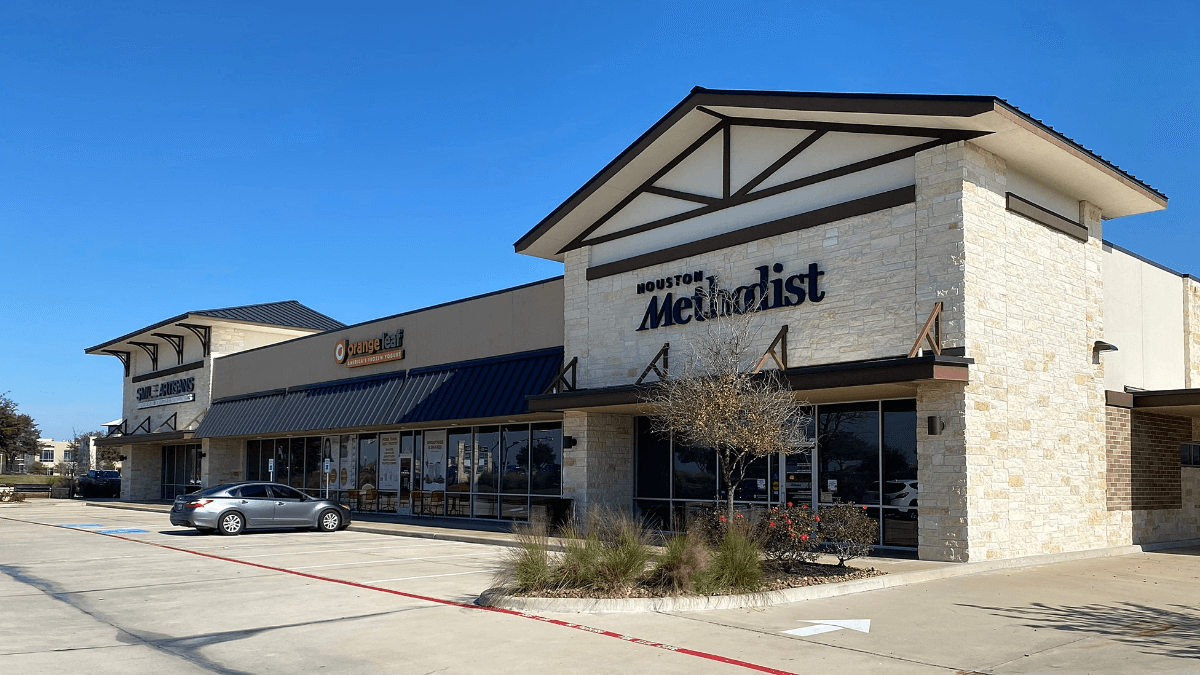
Consumer demands are driving a shift in the mindset and strategies of healthcare providers. This includes moving to more convenient locations, which are often in retail settings. As the disciplines of healthcare property selection and retail real estate merge, healthcare providers should keep a few issues in mind as they evaluate repurposing traditional retail property.
4 Key Issues to Consider
Base Building Infrastructure
Shopping Centers have historically been built with traditional retail tenants in mind. The cost to build a retail property is less expensive than the cost of a high-quality medical office building simply because of differences in construction type and base building infrastructure costs. The needs of a medical office clinic, urgent care operation, surgery center, or emergency facility from an infrastructure perspective is vastly different from that of a traditional retailer. The HVAC, mechanical, electrical, and plumbing requirements of typical medical tenants that are baked into the initial design of a high-quality medical office building, may not be up to acceptable standards in an existing retail property.
As healthcare tenants look to repurpose retail properties for medical use, the potential costs of bringing the property’s base building structure to an acceptable standard need to be evaluated.
Tenant Improvement Costs
Medical tenants demand greater landlord-funded buildout allowances than traditional retailers, and structuring these can be challenging. Medical office building owners are familiar with the buildout requirements of medical tenants and structure the pro forma accordingly. Medical office build-outs, excluding FF&E, can easily run $150 to $200 per square foot or more, depending on specific requirements and base building infrastructure, and the cost of a retail conversion can be daunting.
Shopping center owners historically didn’t typically build-out stores for traditional retailers and provided only minimal tenant improvement allowance packages. While this has begun to change over recent years, the typical allowances offered by shopping centers owner pale in comparison to those of most medical office building owners.
When negotiating a lease for a medical user in a repurposed retail space, the shopping center ownership may not be financially structured to provide the same tenant improvement allowance that an institutional medical office building owner will offer. In some cases, from the viewpoint of the retail property owner, even though healthcare tenants look increasingly attractive, particularly in the current retail environment, it may make more sense to wait on a more traditional retailer who is less costly to place in the center to lease the vacancy.
Size Matters, Parking and Tenant Mix
The demographics and visibility of a well-located high-traffic shopping center may look attractive to a healthcare user but medical tenants need to pay special attention to the tenant mix. A high-end jeweler or small luxury retail shop doesn’t put the same capacity demand or wear and tear on the parking lot and doesn’t “dirty” the corridors nearly as much as does a grocery store or typical big box retail tenants that generate high volumes of street traffic.
Primary care clinics require abundant parking, and healthcare providers have for many years recognized the importance of convenient parking for their facilities to manage the patient experience. However, shopping center owners have historically been reluctant to provide any form of reserved parking.
The migration trend to retail settings by healthcare providers is rooted in providing more convenient access to healthcare for their patients. Consumers have placed an increasing emphasis on location and not just the provider. As a result, healthcare providers have gravitated to smaller shopping centers looking to establish locations in densely populated suburban neighborhoods with attractive demographics and easy access versus the large big box power centers on major freeways. There have been some headlines lately about healthcare providers leasing large blocks of space in malls or big box power centers, but the vast majority of the healthcare retail leasing activity I see has much smaller requirements. My clients have not shown much interest in the big boxes and are looking to establish retail locations in highly visible single-tenant buildings on major thoroughfares or well-located neighborhood shopping centers with convenient parking. We have stayed away from large grocery-anchored shopping centers and big box power centers. In many cases, anchor retailers located in big box power centers have use restrictions built into their lease agreements regarding how much office or medical use is allowed in the center.
Lease Structure
The structure of a typical retail lease document looks vastly different than that of a medical office building lease and often fails to address many of the key issues germane to the nature of a medical tenancy, both from the tenant’s and landlord’s perspective. Shopping Center owners typically have had their attorneys draft a lease with a retail tenant in mind. As a result, a typical retail lease document may not contain several key items important to a medical tenant such as:
Permitted Use: Some shopping centers have historically had restrictions against medical as an accepted use. While it makes sense that the landlord would be willing to strike or modify the use clause if he is entertaining a medical tenancy, it needs to be removed from the lease, preventing any vehicle for the landlord to recapture your space to accommodate a larger tenant. Medical tenants should also have the landlord sign off that no other tenant of the property has an exclusive use right preventing medical services. The scenario that comes to mind is that there is a retailer such as Walgreens, CVS or Target in the center who has established retail medical clinic operations in recent years within their stores as an ancillary service, and they have the exclusive right to medical services.
Medical tenants use hazardous materials and generate biomedical waste. Medical tenants can use X-ray machines, CT scans, MRI equipment, and other diagnostic machines that may generate harmful radiation or exceed permitted electrical use. Some medical tenants also have the need for a backup generator. As a result, this creates special requirements that need to be accounted for in the retail lease document to ensure compliance.
Landlord Inspection & Privacy: Generally, all commercial leases provide the landlord the right to re-enter your space to show the premises to future tenants, inspect for compliance with the lease and allow access to make infrastructure repairs in the lease premises and elsewhere in the building. Yet health care providers need to limit the landlord’s access to examining rooms as well as access to patient records. While MOB owners are very familiar with dealing with the privacy requirements of healthcare providers, the same can’t always be said for a shopping center owner.
Relocation Provision: It is common for retail leases to contain provisions requiring the tenant to consent to substitute premises should the landlord decide that it is in the landlord’s best interest to move the tenant from one suite in the center to another. Because of the cost of a medical build-out, any relocation provision should be removed from the lease.
Liens: As a result of the cost of medical leasehold improvements, physician practices often finance leasehold improvement costs above the landlord allowance as well as medical equipment purchases. Lien rights provided to the Landlord should be subordinate to the Tenant’s lenders for medical equipment purchases.
Restoration of Premises: Virtually all office space and retail leases contain provisions addressing the Landlord’s and Tenant’s rights and responsibilities regarding restoration obligations at the end of the lease. These provisions need to dovetail with the special situation of a medical tenant.
It is important for any medical tenant to have a real estate attorney familiar with the unique needs of a healthcare provider review and negotiate some of these legal issues.

Healthcare in a Retail Setting is Evolving
In 2017, the narrative was simple: “Retail is dying, and healthcare can pick up the pieces.” Fast forward to 2025, and the script has flipped. “Medtail” (Medical + Retail) is no longer an emerging trend—it is the industry standard. But with retail vacancy rates at historic lows and construction costs at historic highs, the game has changed.
The “Digital Front Door” has merged with the physical one. Patients today book appointments on their phones and expect the same friction-free experience when they arrive: easy parking, high visibility, and proximity to where they shop and dine.
This consumer demand has forced healthcare providers into a head-to-head battle with traditional retailers for prime space. Unlike a decade ago, retail landlords aren’t just desperate to fill dark boxes; they are selective. If you want to put a clinic in a power center in 2025, you need to understand the new rules of engagement.
In 2025, the “Medtail” opportunity is massive, but the execution risk is higher than ever. You aren’t just competing with other doctors; you are competing with well-capitalized retailers in a supply-constrained market.
You need a real estate strategy that accounts for clinical construction costs, regulatory zoning, and patient access. Don’t navigate the retail jungle with a generalist broker.
Frequently Asked Questions
Q: What are the biggest hidden costs when converting retail space into a medical clinic in Houston?
The biggest surprises are almost always behind the walls. Retail spaces were built for merchandise, not medicine, and upgrading HVAC, electrical, and plumbing to meet clinical standards adds up fast. Medical build-outs in Houston commonly run $150 to $200 per square foot, and that number climbs when imaging equipment, generators, or specialized systems are involved. Retail landlords also tend to offer smaller tenant improvement allowances than medical office building owners, leaving tenants to fund more of the build-out themselves. Commission a building systems assessment before you sign anything, and negotiate both the economics and the scope carefully.
Q: Is leasing space in a Houston shopping center better than a traditional medical office building for patient access and growth?
For the right practice, retail can be a real advantage. Visibility, convenience, and proximity to where patients already live and shop drive patient acquisition in ways a traditional medical office building often cannot match. In Houston’s high-growth suburban submarkets, a well-located neighborhood center frequently outperforms larger alternatives on access and new patient volume.
The risks are real, though. Permitted use clauses, co-tenancy provisions, and relocation rights can create serious operational problems if not addressed before signing. A retail lease written for a restaurant is not built for clinical operations, and the differences matter. The opportunity is there, but it requires a lease negotiated specifically for healthcare use.