Skip to content
The Tenant Advisor
Envelope Linkedin
  • About
  • Tenant Representation
  • Healthcare Services
  • Clients
  • News
  • About
  • Tenant Representation
  • Healthcare Services
  • Clients
  • News

The Fortune 500 Headquarters: Where are they in 2026?

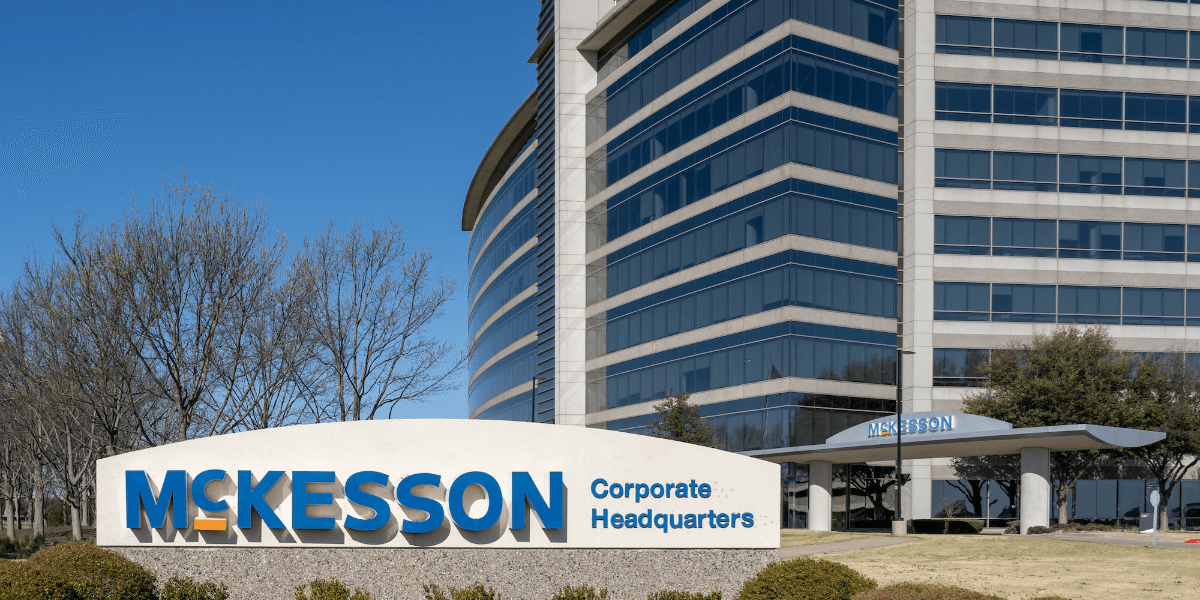
McKesson HQ
  • by Coy Davidson | June 20, 2026

Share Post

Popular News Topics

  • Archive Classics
  • Healthcare
  • Houston
  • Industrial
  • Market Reports
  • Marketing
  • Office
  • Retail
  • Tenant Representation
  • U.S. Research

Most Fortune 500 Headquarters Cluster in Three States and Texas Now Leads

Texas tops the 2026 Fortune 500 for the first time, claiming 57 headquarters to California’s 56 and generating $2.8 trillion in revenue versus California’s $2.7 trillion. New York City leads all metros with 53 but trails both states in count. Together, these three states account for a disproportionate share of the largest companies in the country, and the reasons are structural, not coincidental.

Texas built its advantage on no state income tax, lower operating costs, and a diversified economy spanning energy, technology, and healthcare. Houston and Dallas-Fort Worth anchor the state’s corporate base, and Austin has become a relocation magnet: Tesla and Oracle both moved their headquarters there, and the pipeline hasn’t stopped.
 
California, despite slipping to second in total count, remains the global center of technology and innovation. Silicon Valley draws the largest tech companies in the world, while Los Angeles and San Francisco add depth across industries ranging from entertainment to finance.
 
New York City’s 53 headquarters reflect a different kind of dominance. It is the world’s financial capital, and its Fortune 500 roster reflects that: banking, insurance, media, healthcare, and retail all have significant presence.

Houston Ties Chicago for Second Place Nationally and Outearns It by Nearly 2x


Houston’s metro count reaches 27 Fortune 500 companies this year, matching Chicago after the city dropped three. The revenue comparison makes the tie misleading: Houston’s companies generated nearly twice Chicago’s total, reflecting the scale of firms like Exxon Mobil (No. 9) and Chevron (No. 21), both of which completed headquarters relocations to Houston in 2023 and 2024 respectively. Six Fortune 500 companies have relocated to Houston since 2020.

Later this year, Expand Energy (No. 362) relocates from Oklahoma City to Spring, Texas, pushing Houston to 28 companies and sole possession of the No. 2 metro ranking nationally.

What fortune 500 corporations have there HQ in the Houston area

What This Means for Commercial Real Estate

Fortune 500 relocations are a leading indicator for office demand, and Texas is the clearest beneficiary in the country right now. When a company of Exxon Mobil’s or Chevron’s scale moves its headquarters, it doesn’t just lease a floor. It anchors a campus, drives supplier and vendor clustering, and pulls mid-market occupiers looking to be near their largest clients.

Houston’s Energy Corridor and The Woodlands submarkets have all seen this dynamic play out. The Woodlands in particular, where Exxon Mobil built its 385-acre campus, has become a case study in how a single Fortune 500 commitment reshapes an entire submarket’s office fundamentals.
 
Dallas is watching the same trend. With 24 Fortune 500 headquarters, it remains a top-five metro nationally, and continued in-migration from California and the Northeast keeps is driving demand in the office market. While technically not all corporate headquarter relocations we have seen major corporate campus announcements from financial giants such as:
 
  • Goldman Sachs: 5,000+ employee campus
  • JPMorgan Chase: 12,500+ employees at its Plano campus
  • Wells Fargo: 4,500 employees at its new Irving campus
  • Citi: 11,000 employees in Irving
  • Bank of America: New trophy tower under development
 
These are not satellite offices. They are major operational hubs housing trading, investment banking, wealth management, technology, risk management, and corporate functions.

Recent News

Medical Outpatient Building

What a Strong MOB Market Means for Healthcare Tenants

The Medical Office Market Is Strong. Here’s What That Means If You’re a Healthcare Tenant Medical outpatient buildings are having a moment, and if you’re a healthcare provider looking for space, you need to understand

Ambulatory Care

Ambulatory Care Is Rewriting the Healthcare Real Estate Map

The Hospital Is No Longer the Center of Healthcare Real Estate Ambulatory care volume is projected to grow 8.2% between 2024 and 2029. Hospital inpatient volume is declining at 1%. Those two numbers tell you

Why Health Systems Are Winning the Freestanding Emergency Department Game

The Rise, Fall & Resurgence of the Freestanding ED

Why Health Systems Are Winning the Freestanding Emergency Department Game The freestanding emergency department has had one of the more turbulent runs in healthcare real estate history. Meteoric rise. Brutal correction. Quiet comeback. Pushing toward

Houston Office Market Holds Steady in Q1 2026, But the Best Space Is Disappearing Fast

Houston Office Market Report | Q1 2026

Houston Office Market Holds Steady in Q1 2026, But the Best Space Is Disappearing Fast Houston’s office market opened 2026 on a cautiously optimistic note as leasing activity held firm, vacancy remained essentially flat, and

Featured transactions

  • Hoyer Global Inc.
    Houston, TX
  • KMG Chemicals - Forth Worth
    KMG Chemicals
    Fort Worth, TX
  • Brookhollow
    Whitehat Security
    Houston, TX
  • Houston Methodist Hospital
    Houston, TX

The Tenant Advisor

Coy Davidson, Senior Vice President, Colliers | Houston

1233 West Loop South, Suite 900, Houston, TX 77027

Envelope Linkedin

Commercial Real Estate Websites by CREgrow -
Design, Development, Hosting, Support, SEO

TREC Information About Brokerage Services
Texas Real Estate Commission Consumer Notice
Disclaimer & Terms of Use